Discovery Tour 2026
What we found changes everything
Why Cross the Pacific?
We didn't go to network. We didn't go to sightsee. We went because the answers we needed don't exist in Australia.
See Scale
What does a market 40x our size actually look like? How do networks, platforms, and contact centres function at millions of events per year — and what breaks when you try to get there?
Learn Growth
Companies that started exactly where we are built billion-dollar operations. What decisions did they make at our stage? What would they do differently? And how do we compress that timeline with AI?
Read the Map
Acquisitions. Embedded insurance. OEM consolidation. The global industry is reshaping fast. We needed to see the moves being made — before they're made on us.
Seven meetings. Five cities. Twenty-one days.
We didn't go to watch. We went to compress a decade of learning into three weeks.
The Ecosystem
Four layers define the modern roadside assistance value chain. Understanding where 365 sits — and where we can expand — is the key insight from this trip.
The Opportunity Is the Entire Stack
We're here at the execution layer. But this trip showed us that the real value — and the real defensibility — comes from owning the platform layer above us.
Every company we met is trying to move up or down the stack. The ones winning are the ones who own the orchestration layer.
↑ Orbit365 is our path up the stack — from execution to orchestration.
The Network Is the Product
The same insight kept showing up in every meeting room. It doesn't matter how good your platform is, how slick your digital experience is, or how smart your AI is. If you can't get a truck to the car, none of it matters.
Three Companies. Three Strategies. Same Conclusion.
Bosch & Roadside Protect
Bosch didn't buy Roadside Protect for the software. They bought the provider network. Own the vehicle data layer AND the execution layer? You can cut out the platform entirely. Vertical integration from trigger to truck.
Toyota's 7-to-1
Seven separate RSA programs. Different suppliers, different standards, different outcomes. Toyota collapsed it all under one supplier, one network, one set of KPIs. Control through consolidation. The platform that handles that complexity wins.
Agero's Digital Network
40,000+ providers across all 50 states. Fully digital dispatch. Quality-based routing. Agero didn't buy a network — they built a platform that is the network. The dispatch logic itself is the competitive advantage.
Every company we met is fighting for control of the supply chain.
365 already has the network. The question is what we build on top of it.
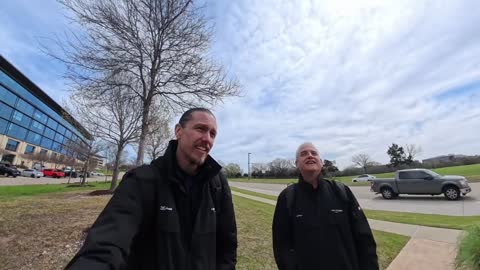
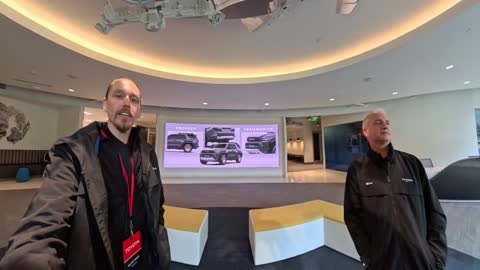
Toyota Motor North America
7 Business Units
Toyota Care, Employee Lease, Lexus, Connected Tech, TFS Pre-paid, TFS VSA, Kinto Share — each with unique RSA requirements and SLAs.
200–250K events per year across all programs
Single Supplier Model
2021 RFP consolidated everything to AAA. One provider, one contract, one throat to choke. Procurement drives the game.
Connected Vehicle
SOS button + app triggering events. But phone calls still dominate — connected tech is supplementary, not primary.
AI Cautious
Governance board with few approvals. AI is assistive, not autonomous. Heavy compliance culture around emerging tech.
Lexus White Glove
Dealer-based RSA with hero experience expectations. The premium tier demands concierge-level service delivery.
Key Takeaway
RSA is a portfolio, not a product. Procurement owns the game. To win Toyota-scale contracts, you need multi-program config, tiered service delivery, and KPI governance built into the platform.
🚀 What This Means for Orbit
- Multi-program configuration engine — one platform, many SLAs
- Tiered service delivery — from standard to white-glove
- KPI tracking per program, per business unit, per brand
- Procurement-ready reporting and compliance frameworks
📹 Meeting footage
Talking Points
- Portfolio management model — Toyota treats RSA as a portfolio across 7 BUs. How should we structure our multi-client governance?
- Procurement-led vs Ops-led — Toyota moved RSA under procurement. What does this mean for our sales approach?
- Single-supplier consolidation — They consolidated to one supplier. Are we positioned to be that supplier for Australian OEMs?
- KPI framework — Outcome-based SLAs (MPS + complaint rate). How do we benchmark against this?
- Lexus white-glove model — Concierge-tier RSA as a differentiator. Can we build this into Orbit as a service tier?
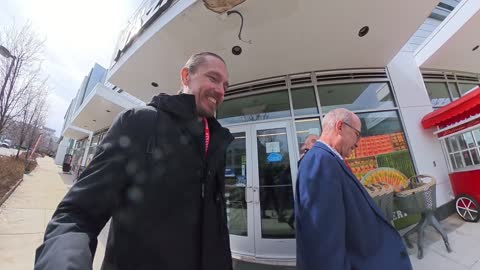
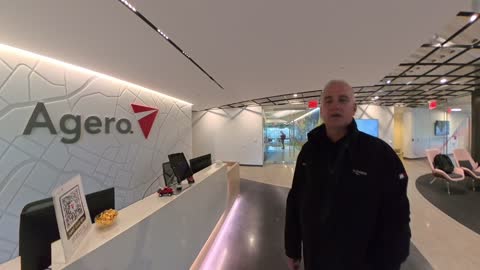
Agero
Swoop Platform
Monolithic core + microservices. Single source of truth for all dispatch, tracking, and provider management. The brain of their operation.
~400 IT Staff
Massive engineering investment. Their tech team dwarfs most roadside companies' entire headcount. Platform-first DNA.
Provider Marketplace
"Rate takers, not rate makers" — providers set their own rates. Market dynamics determine pricing, not fixed contracts.
Quality-Based Dispatch
Surveys → per-service-type ratings → dispatch weighting. Quality literally determines who gets the next job.
Outcome SLAs
MPS + complaint rate, not just arrival time. They measure what matters to the customer, not just logistics.
Real-time Portals
Clients watch dashboards obsessively at first, then trust builds, then they stop watching. Transparency creates confidence.
Key Takeaway
They made the shift from roadside company with tech → tech company that delivers roadside. That's the transformation we need to make.
Where Agero Is Ahead
- Digital dispatch automation
- Platform depth & maturity
- IT investment scale (~400 staff)
- 65% fully digital interactions
Where 365 Is Ahead
- "Never leave a customer stranded" philosophy
- AI-first vision from day one
- Clean-sheet Orbit build — no legacy tech debt in the new platform
- Speed of innovation — lean & fast
📹 Meeting footage
Talking Points
- 65% digital benchmark — What's our current digital percentage? What's realistic in 12 months?
- 400 IT staff — Agero invested heavily in tech. What's our tech-to-ops ratio and where should it be?
- Swoop platform — Their platform handles dispatch, payments, provider management. How does Orbit compare architecturally?
- Human marketplace advantage — "We never leave a customer stranded." How do we quantify and market this?
- Provider self-set pricing — Agero lets providers set their own rates. Should we test this model?
- Digital-first, human-backup — Their model vs our model. Where's the right balance for Australian market?
Cover Genius
"Insurance becomes invisible and contextual"
Embedded Protection Platform
Not a traditional insurer. They enable partners to embed protection products into their own customer journeys — invisible and contextual.
Partner-Led Model
Partner owns the customer. Cover Genius enables product, pricing, claims, and compliance. White-label by design.
Revenue Model
Per-subscription, per-bundle — not per-job. Recurring revenue attached to the lifecycle of the product, not the incident.
Global Distribution
Multi-country, multi-regulation. One platform, every market. Regulatory complexity is their moat.
Claims Automation
Digital-first, minimal human intervention. Claims flow through automated pipelines. The goal: zero-touch resolution for standard cases. This is where AI meets insurance meets roadside.
Key Takeaway
Agero showed how to OPERATE. Toyota showed how to BUY. Cover Genius shows how to MONETISE. Roadside is a perfect embedded product — situational, asset-tied, high perceived value, low utilisation.
Current Revenue
Per-Job Fee
Linear. Capped by volume.
Future Revenue
Per-Subscription / Per-Bundle / Embedded
Recurring. Scalable. Compounding.
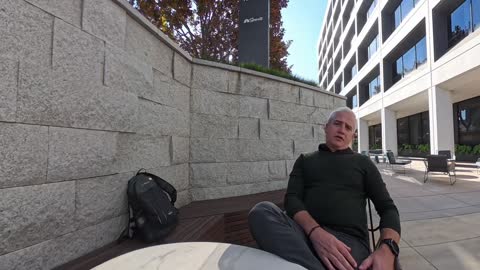
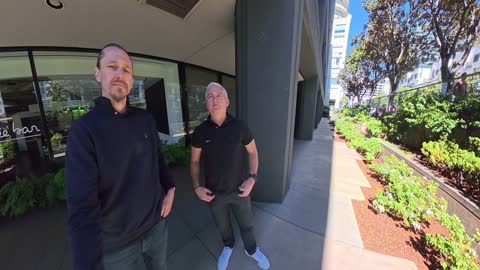
📹 Meeting footage
Talking Points
- Embedded protection model — RSA as embedded insurance. Who are our distribution partners?
- Revenue model shift — From selling RSA as a service to powering protection experiences. What's the commercial model?
- Low utilisation, high perceived value — RSA is claimed ~2-5% of the time. How do we price for perceived vs actual value?
- Partnership pipeline — Who are the Australian equivalents of Cover Genius's distribution partners?
- API-first integration — What technical capability do we need to embed into partner journeys?
Bosch / Roadside Protect
⚠️ The Disintermediation Risk
Vehicle Data Layer
Telematics, connected vehicle triggers, OBD data. They own the hardware-to-cloud pipeline that generates roadside events.
Acquisition Strategy
Bought Roadside Protect to own the execution layer. Classic vertical integration — hardware meets service network.
Platform Ambitions
Trying to become end-to-end: trigger detection, dispatch, execution, billing. They want the whole stack.
Key Takeaway
Partner or competitor? The answer is both. 365 must own the platform layer. If we cede orchestration to Bosch, we become a replaceable commodity in their supply chain.
🛡️ What 365 Must Do
- Own the platform layer — Orbit365 is the defensive moat
- Don't cede orchestration to Bosch or anyone else
- Build integration points WITH Bosch telematics, not dependency ON them
- Make 365 the indispensable intelligence layer between hardware and execution
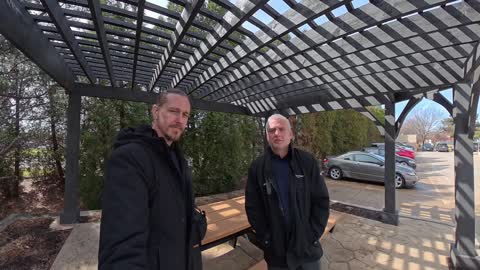
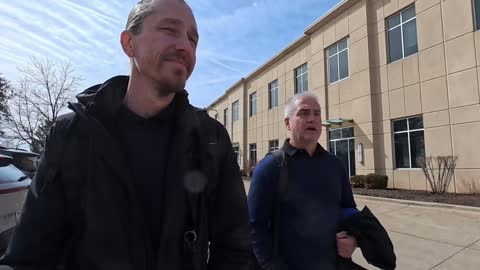
📹 Meeting footage
Talking Points
- Partner or competitor? — Bosch controls vehicle data AND execution. What's our defensive strategy?
- Vehicle data layer — Connected car data is the trigger layer. How do we access it without Bosch?
- Disintermediation risk — If OEMs go direct to Bosch for RSA, what's our value proposition?
- Platform ownership — "The company that owns the platform layer wins." How do we accelerate Orbit?
- Coopetition strategy — Work with Bosch where we must, compete where we can. What are the boundaries?
The Question We Must Answer
Sales-Led
Drive sales, win contracts. Fast revenue. But you're selling a dying platform — running faster on a treadmill.
Services Company
Ops excellence. Where we ARE today. But services get disintermediated — Bosch just proved that.
Platform Company
Build Orbit. The RIGHT answer. The HARDEST path. But the only one that creates lasting value.
The Answer: All Three — Sequenced, Not Parallel
Sales funds the runway. Services keeps the lights on. But every spare resource, every strategic decision, points toward Platform.
Squad 1: CAPs
Keep the Lights On — maintenance, stability, revenue continuity. The foundation.
Squad 2: Orbit
Build the Future — cloud-native, multi-tenant, API-first. The strategic bet.
Squad 3: Helix
Automate & Elevate — AI workforce, process automation, intelligence layer.
🏗️ The Platform Playbook — How We Get There
What Agero Built (10 Years)
- › Digital-first dispatch engine (Swoop)
- › Provider marketplace with dynamic pricing
- › Real-time telematics integration
- › White-label platform for OEM clients
- › 400+ engineering team
What We Build (2 Years with AI)
- › Orbit365 — cloud-native, multi-tenant, API-first
- › OrbitLink — provider app with real-time job management
- › Helix AI — automated dispatch, quality scoring, predictions
- › Embedded RSA — Cover Genius model for partner ecosystems
- › AI workforce — 10x output, fraction of the headcount
The unfair advantage: Agero spent 10 years and hundreds of millions building their platform with traditional engineering. We can build Orbit in 2 years with an AI-augmented team that moves 5-10x faster. The playbook exists — we just need to execute it with modern tools.
"The trip confirmed we're in the right market, with the right network, and the right vision. The gap is execution speed and platform depth."
Reality Check
Three Six Five is where Agero and Cover Genius were ~10 years ago. We have CAPs as legacy — it's real and it demands resources. But we also have something they didn't: an AI workforce already delivering, the ability to move faster than any incumbents, and a clean-sheet opportunity with Orbit to build right from day one.
⚠️ The Investment Reality
This transformation requires investment in people. AI amplifies output massively — but it needs skilled engineers to direct it and dedicated staff to manage it. We cannot exhaust our current IT resources trying to run CAPs, build Orbit, AND stand up the AI workforce simultaneously. More engineers. More AI operators. Ring-fenced capacity. That's not optional — it's the prerequisite.
What the Winners Actually Did — 6 Patterns
Heavy investment in IT staffing. Agero has 400 IT staff. You can't build a platform with a skeleton crew — even with AI.
Relentless focus on a clear goal. Not ten initiatives — one north star. For us, that's Orbit.
Run + Build separation. Dedicated teams for keeping the lights on vs building the future. No shared resources.
Don't overreach. Focus on core market. Win Australia before going global. Depth before breadth.
Long-term strategic alignment. Board and investors bought into a multi-year transformation — not quarter-by-quarter thinking.
The biggest shift. They didn't just build systems to support ops. They turned capabilities into products. Agero → dispatch marketplace as a product. Cover Genius → protection as a product. From "we do roadside" → "we offer a platform."
Talking Points
- Sequencing the three paths — What percentage of resources go to each squad? What's the split?
- Execution speed gap — We identified this as the key gap. What are the top 3 bottlenecks?
- AI workforce ROI — Echo is already delivering. What's the measurable impact so far?
- Orbit MVP scope — What are the must-have features for launch? What can wait?
- Cultural transformation — Moving from services to platform thinking. How do we bring the team along?
- Funding the transition — CAPs revenue funds Orbit development. What's the financial model?

The Operations Playbook
Insights for the front line — practical improvements we can implement from what we learned.
🔄 Provider Network Optimisation
Apply Agero's marketplace model — quality-based dispatch, provider self-set pricing, and dynamic allocation. Let the market work for us.
📞 Contact Centre Automation
AWS Connect migration path. AI-powered routing, real-time sentiment analysis, and automated first-touch resolution. Target: 65% digital like Agero.
🎯 Dispatch Improvements
Quality-based dispatch, not just proximity. Per-service-type ratings, survey-driven scoring, and intelligent provider matching.
📊 Quality Governance
Toyota-style KPI model — outcome SLAs (MPS + complaint rate), per-program tracking, and procurement-ready reporting.
🏪 Dealer Integration
The Lexus white-glove model validated our approach. Dealer-based RSA with concierge-level service is a differentiator, not a cost centre. Build it into Orbit as a first-class service tier.
Talking Points
- AWS Connect migration — Timeline and cost for contact centre migration. What's the business case?
- Quality-based dispatch pilot — Which market/service type do we pilot first?
- Provider network strategy — Agero model vs current model. What changes and when?
- Digital target — What's our 12-month digital transaction target? 30%? 50%?
- Dealer integration roadmap — Which dealers first? What does the tech integration look like?
The Roadmap
From insight to action. Here's the sequenced plan to turn what we learned into competitive advantage.
Quick Wins & Immediate Actions
Debrief with leadership team. Identify 3-5 quick wins from Agero's digital-first model. Begin AWS Connect evaluation. Document Toyota KPI framework for implementation.
Squad Formation & Orbit MVP Scope
Formalise three squads (CAPs, Orbit, Helix). Define Orbit365 MVP scope based on ecosystem insights. Begin quality-based dispatch pilot. Initiate Cover Genius partnership exploration.
Platform Launch & First Migration
Orbit365 MVP launch. First client migrated from CAPs. AWS Connect live. Provider marketplace pilot. Embedded protection product proof-of-concept.
Full Transformation
Multi-tenant platform operational. 65%+ digital dispatch target. Embedded revenue model active. Bosch integration layer live. ROI framework validated against actuals.
⚠️ None of This Happens Without Investment
Every company we visited had one thing in common: dedicated, isolated engineering teams. Not shared resources juggling BAU and builds. Not developers pulled between keeping the lights on and building the future. Separated squads with clear mandates.
Dedicated team keeping CAPs alive, stable, and supported. No distractions. BAU is their only job.
Isolated engineers building Orbit365 from scratch. No BAU tickets. No production firefighting. Pure product development.
AI workforce + operators automating processes, building integrations, and accelerating what would take Agero 400 staff to maintain.
The hard truth: Agero has ~400 IT staff. We have a fraction of that. We can compress timelines with AI — but we still need dedicated engineers who aren't context-switching between BAU and builds. The squad model only works if the squads are real, resourced, and isolated. Without that investment, this roadmap stays a slide deck.